Showing posts with label striptease. Show all posts

Friday, June 2, 2017

Wanting to be a part of everything

Since a couple years ago I've had a pretty steady amount of offers to be in many different kinds of burlesque and variety shows. This is normally an awesome thing, as it means I have to hustle less to get myself booked. I appreciate and am grateful that enough show producers can find a place for me in their plan for an entertaining evening.

I had a moment recently where I found myself hesitating while writing a response email. A response in which I was declining a gig.

"DECLINED!"

I had a really hard time writing this one email, and was worried about how what I was saying might come off. Typical anxiety notwithstanding (this producer will hate me/never book me again, I'll miss out on a chance to do something fun, if I don't do this it'll look bad, etc), this is an activity I find more stressful than all of the preparation that comes with an acceptance. Though I've written these types of responses before, I think the reason why I'm having so much trouble this year is for two main reasons;

1 - Due to recent life circumstances, I have the capacity to take on fewer commitments than ever before.

2 - Having done festivals and shows in a wide mess of new places, I now know EXACTLY what I'm saying "no" to.

Saying no to things that are too much for you to handle is a healthy practice. With that said, I've -NEVER- been good at it. Despite Lucifer Christmas's recent blog post assuring me that "there will always be another gig," I know that in my own little mind, there will be some degree of omnipresent regret for saying no. It's awful, and I don't know how to make that go away and shut up with the noises.

As I watch my friends head off to other cities (and countries) to go to festivals, I do feel a little bit of FOMO. I always make a short list in my head every year of all the festivals I want to do, and make a casual attempt to remember when and where they are each year.

Further compounding this is the mathematical fact that I only have a finite amount of years left to try to follow up on some of these dreams before I retire from burlesque or die.

A few more shots to the head like this, and that day may be right around the corner.
Photo by Rob Starobin, NYC Nerdlesque Festival.

On the other hand, I am writing the majority of this after having just finished a 2 hour nap in the middle of a relaxing getaway in New Hampshire. Between a demanding 9-5 weekday job, regular circus and strength training, and an average of 10-15 various gigs per month, I forgot how completely satisfying an afternoon nap can feel.

Granted, this last week was a grind--six shows, three of which involved acrobatic and physically painful stage combat (thank you for that, Holy Shitsnacks, An Archer Burlesque). The show turned out amazingly, and the cast was completely on their A-game. And speaking of which, look at this amazing cast intro video;


Video by Adriano Moraes, all cast credits contained within.

Some people have the ability to grind it out and make this whole burlesque thing their living, but I know that I don't have the energy to do that. Frankly, I'm looking forward to being able to rest up a bit and take the biggest swing I can at the next thing I'm able to go 110% on. To me, that seems like the best way to get back in, and I know that I'll be less stressed (and tired) if I'm able to choose what that next thing is.

There's a lot of questions spinning around in the blender here for me. What kind of fulfillment do I get from packing my schedule full of things that scare me? Why do I have such ennui about declining things that my Meyers-Briggs test results tell me I should hate? Why do I find satisfaction doing something that makes my father uncomfortable?

Maybe it's because of that time I threatened to cut off another man's muttonchops.
Photo by Roger Gordy, Old School Game Show

What is it exactly that I'm afraid to give up? I guess the best answer I can come up with is....that I enjoy being other people. Is that escapism?

As burlesque performers, we all want to entertain--that much is universally true. I look at entertaining others as a side benefit, since I feel like there's a bigger thrill to be had by exploring the lives of people and characters with other perspectives. Each time I get to perform on stage is an opportunity to move, speak, look, act, and briefly live like someone else. I even treat my professional life that way; I get a truly embarrassing kick out of being the regular human coworker at the water cooler that also likes sports.

LOOK HOW NORMAL I AM

Maybe a part of that is the rush that I experience from fooling people around me into thinking I'm "good enough" to keep a job, have social skills, or fulfilling emotional relationships. Maybe it's the counterweight that the edginess of burlesque offers to an otherwise perfectly normal life. Maybe I'm just scared of having to experience and sort through the feelings and experiences that come with each day on my own.

Whoa man. That went right into the abyss.

Cool!

Anyway, I think there's an intangible value in feeling like you're in demand. If people want you to do things, it would be selfish to deny them what they want, right? But I'm feeling lately like taking some time to be a regular life person should be a way for me to get re-centered, re-prioritize everything in my life, and remind myself why I love performing. Regaining some perspective might help me get back there.

Thursday, December 22, 2016

Mindless Praise vs. Effective Critique

As many performers I know can attest to, it's very easy to get praise for your work from fans, peers, and other performers. It's almost impossible, however, to find good, constructive critique that pushes you to be better.

After watching myself in the role of Barry Dylan from the burlesque adaptation of the television show "Archer," I felt thoroughly pleased with myself and the performance I gave. I mention this specifically because I rarely feel this way about my performances. Even though I felt satisfied with how it went, I still wouldn't have minded if someone had made some suggestions on what could have used more polish.

"I said GOOD feedback, you dullard!"


The best performers I know place a high value on effective critique, and I've come to find that there isn't all that much of it in burlesque. In general, I've found that it's very easy to surround yourself with people who have nothing but adoration for you, and I absolutely believe that there's nothing worse than that if you're trying to grow as an artist. It's hard to fight that instinct.

As far as the duo act I did in that same show, I felt a lot differently. In that act, Danny Drake (as Archer) and I did a duo-acrobatics striptease that resembled a high-energy fight scene, a confrontation where we illustrated the futility of these two characters' persistent quarrel throughout the show. I discussed with Danny a lot of personal critiques I came up with about how the performance went, and would have loved to have heard more from other performers about what worked and what didn't while we were still in the rehearsal phases. In my opinion, the act looked a bit contrived and juvenile on video, despite me being smashed in the head at one point with a glass bottle.

Yes. It did really happen.

It got me thinking quite a lot about the reasons our performances sometimes don't look polished in the ways we want them to. Why do we create our performance pieces in isolation while avoiding checking in with people we trust along the way?

I was reading Mary Cyn's blog about how to take and give effective critique, and it inspired me to want to finish this post that I've kept shelved for a long time. One of the big reasons that I wanted to hold off on finishing this topic is that I knew I hated some parts of burlesque performance because of how the community at large handles effective critique, but wasn't sure how to get it into writing. Mary helped me to figure that out with her own take.

The title of this entry, phrased as "Mindless Praise vs. Effective Critique," doesn't quite encapsulate the entirety of the issue. If I'm honest, I would tell you that me giving crappy critique and shaded criticisms also factors into my motivation for writing this, though that seems like too many words for a blog title, expressly for the point of washing my hands of things my younger self once did. One of the reasons I like to teach other guys how to do burlesque is because it gives me the opportunity to help develop and course-correct in a forum where constant feedback is the expectation, and to further reinforce those lessons in writing after their first performance. Plus, I get to deliver feedback in a way that I would have wanted to receive it.

"I dunno man. Your words seem a little harsh."


As artists, we have a tendency to believe that the first thing we think of (and indeed EVERY thing we think of) is the best idea anyone's ever had. I've certainly come up with some crap ideas (see; The Worst Burlesque Act I've Ever Done), and some were more obviously crap than others--but the finer point is that it took some hard coaching to get me to the point where I accepted that the aforementioned act was a garbage fire, and I don't know that I would have accepted that conclusion on my own.

The ways we experience rejection in burlesque isn't the same way rejection is doled out in other walks of life. It's fairly straightforward when a hiring manager tells you "you didn't get the job," or when a love interest tells you that she's "not all that into you," but I've found that most of the discord between response and critique in burlesque focuses largely on whether or not you're attractive on stage, and not necessarily on whether or not you executed great choreography or told a truly compelling story. Our audiences and fellow performers frequently tend to focus on whether or not we're "hot" up there, which, if you're a stickler for the technical stuff, can seem extra superficial. So rejection can look like straight up silence, unless you do something aggressively inappropriate.

But we all occasionally tell each other that our performances are "sexy" and "mega-hot," and most of the time that's totally okay to do.


"Please tell me I'm beautiful."


As performers, I think we owe it to ourselves to help each other out with specifics. What I like to do is to pick two or three things that I can say to someone when they leave stage that I loved about their performance;

  • "Hey, I love that your fan dance was just two giant mustaches, it was super clever!" 
  • "That cartwheel into a split right when the theremin solo started was so well-timed!"
  • "Tearing your sleeves off to reveal two tinier, angrier sleeves was choice!"

Alternatively, there are some bits of feedback that are more critical. These are useful to give out (with permission, of course), if the person is looking for a bit more honesty about what didn't work well for you. Bear in mind that while I personally love hearing more corrective comments after a number, most people tend to feel that this works directly against their performance high, which can be a tad soul-shattering. So always make sure it's welcome to say things like these, paraphrased from actual critiques I've given;


  • "Your expression in the beginning was distressed and shameful, like you were a hostage--but I don't know if that was the consistent with the tone of the piece. Was that intentional?"
  • "Your costuming struck me as being racially insensitive. I might avoid using headdresses and kimonos when you do this piece in the future."
  • "I don't think using actual liquids and real knives in your piece was a good idea for safety reasons."
  • "There were one or two dance moves that seemed inconsistent with the mood and music, could you tell me about that part of the choreography?"


Reflexively, this is the kind of stuff I find most helpful. While we ultimately want to be the best performers we can be, the only way to improve is to hear specifically what didn't work, and to parlay those suggestions into conversations about what we can do better.

"This air BJ really worked for me!"

Which brings me to the last part. Often, I find that a shared instinct we have as artists is to explain away criticism. If I know that someone says they are receptive, I'll log my observation with them without ending in a question. Frequently with newer performers, I find that it prompts a (usually lengthy) explanation of why what I mentioned has to stay the same.

I'm not saying that there can't be a reason why something I disagree with should remain in a performance piece--but if it's something that you had to clarify at length to an experienced performer, it probably isn't something that's all that clear to your audience.

So in essence; watch and listen, ask permission to discuss, give thoughtful and meaningful critiques, encourage vigorously, and be receptive when others offer you feedback in return.

ART!

Friday, September 23, 2016

"Masculine" Burlesque and Self-Deprecating Humor

I was scrolling through my performer Facebook like I usually do, when I came across a thread posted by fellow performer Dangrrr Doll that caught my attention. Since I love reading about contentious topics and the oft debated "why we do this" ideologies of burlesque performance, I was inspired to write on it myself.

It's no coincidence that Dangrrr, a terrifically accomplished burlesque performer who I occasionally get to share the stage with, habitually critiques the way we present our concepts on stage. I've even featured her on this blog before, so with that in mind, here's the original post;


In the class I teach here in Boston (now in its fourth installment), this is the core concept I build from--masculine movement, masculine character building, masculine stripper moves, masculine kazoo concertos, masculine giraffe husbandry, etc. It's really the only thing I can speak to as an expert, since it's at the heart of every piece I write and perform. And based on the varying levels of comfort of the men I know in burlesque, it's not always a focal point of everyone's act construction, though for my own students, I like it when they take my lead and make it their own.

When I first sat down to talk with Stratton McCrady and Robin of the "Acting Out" project, Robin was surprised to learn that I was a straight male performer doing burlesque. Even though operating on the pretenses that most burlesque performers are queer to some degree (or that any men who perform burlesque MUST be gay) isn't an unsafe bet, it does beg the following question:

"What does a straight man performing burlesque look like?"

I dunno, this?
Photo by Roger Gordy


While straight men aren't a rare commodity in most walks of life, we are somewhat unrepresented in burlesque. I've found that most straight men don't have any idea how to move like a man might, to say nothing of how to break into the burlesque scene in the first place. As I've alluded to before, I learned most of my first striptease movements from Rogue Burlesque founders Dixie Douya and Bustee Keaton, and those movements weren't exactly....masculine.

After a year or two of figuring out what I wanted to change, I decided to spend some time and effort learning how to walk, crawl, posture, and pose myself as a masculine character. And for several years now, I've spent a lot of time watching myself in the mirror and making changes as needed.

But taking it back a little, I've found that men who jump onto a stage to perform instinctively gravitate toward one tendency; self-deprecating parody. It's almost like there's an expectation for a man to get on stage and put himself down to make himself feel accepted by the audience. It's weird, but I understand it. I used to do it a lot.

Like, an uncomfortable amount.
Photo by Stratton McCrady, Acting Out!


If I've learned one thing about teaching men striptease, it's that men don't have a default "sexy" set of movements. If I ask a new guy in my class to walk around and move like a suave, ladies-man type for the purposes of an exercise, he will almost always include a section where he's pantomiming an aggressive rejection (possibly involving getting a drink thrown on him). Selling confidence, success, and attractiveness in movement is terrifying for many men, and I suspect, a huge reason why they might want to take my class in the first place.

I'll give you an example. Sway Bradbury mentioned that "embarrassment/shame is all about maintaining your masculinity in moments of vulnerability; i.e. your pants fall down and you feel shame, portraying your nudity as something you feel negatively towards and understand should be hidden. Whereas in high femme burlesque, what I consider classic burlesque, nudity is something you revel in. That vulnerability isn't embarrassing, it's empowering."

That's real. If a guy is on stage and acting out a scene where his shirt and pants are suddenly missing, he's embarrassed, he's shy, and his first move is to cover it up. That same scene acted out by a woman? She's suddenly the one in control. She's sexy, intense, and using that as her weapon.

I want to say that this has to do with the power dynamic of burlesque and how it contrasts with the power dynamic of a gendered society. Should straight men naturally feel like they need to approach burlesque cautiously, and justify their presence in the space with a few jokes made at their own expense? Maybe that's just the price of entry. But I think there's something else hiding there.

I think it has more to do with the fact that men are raised without the burden of having their sexuality constantly available for consumption, a benefit that women don't have the option of. At every turn, women are expected to be sexy and have a way to market themselves constantly with every choice they make in their waking lives. A lot of women I talk to about burlesque performance use the stage as a way to claim ownership of their sexuality--especially since there's so much unjustified entitlement to it in the outside world, perpetrated by media, industry, and random men on the sidewalk. Since men never have to experience this, they don't know what to do in a situation where the expectation turns to them.

"IT'S ALL MINE!"
Photo by Ben A Johnson


The result of this is that straight men on stage have to get naturalized to the concept of being objectified. Even after all these years of performing striptease, whenever I get an aggressive compliment from a stranger about my sexiness on stage, my gut tells me to feel flattered. What I don't feel is guarded, defensive, or threatened. I don't think I'll ever understand what it means to be truly objectified, and that vulnerability is something I could never learn or teach.

Straight men aspiring to perform with sexual and vulnerable burlesque on stage require a bigger understanding of this, myself included. It's that knee-jerk answer that I get from every guy that I talk to about potentially jumping on stage to perform burlesque: It's the "I'm not in good enough shape" response which signals that most of us fellas aren't even remotely conscious of what the concept of sexual desirability is for a male-facing audience--which would explain why gay male performers have a better understanding of the concept. We straight guys instinctively assume that we just have to be hot and show up, and only then can we perceive the ironic vulnerability of what it means to be objectified.

Or, barring that, we could make intentional fools of ourselves to garner favor from the audience. Comparatively, that certainly does seem like a less scary option.

Monday, August 1, 2016

Ember Flynne: "The Business of Stage Names"

I have another guest writer on Throwing Stones this week, who is a supremely talented fire spinner, aerial acrobat, and business person whom I've worked with quite a lot. Although I've touched on the importance of stage names a while back, I didn't really flesh out the issues of safety and accessibility that are part and parcel with this practice.

So I invited Ember Flynne to share those with me.

Ember Flynne - Fire Goddess


My name is Ember—well, not really, but we’ll get to that in a second—and I’m a traveling circus performer based in Boston.

Some years ago, I found out that my entire family was cyberstalking me.

“Google, you know, the search engine,” my mother explained, “I just type in your name and…”

“Mom I know what it is.  But WHY are you Googling me?”

“Just to see what you’re up to,” she said, matter-of-factly.

My parents and I have never been that close, but this was a new low.  Google is for checking that your blind date isn’t an axe murderer, not sating your curiosity about what your twenty-something daughter is doing in her spare time.  It felt weirdly invasive.  Why not just pick up the phone and—gasp—call me?

“Oh don’t get all bent out of shape,” my mom said when I told her as much, “Everybody does it.  Richard Googles his kids all the time.  Your grandmother Googles you; it’s completely normal.”

I’ve always been aware that information about my life could be broadcast to the entire planet without my permission (excepting, perhaps, China), but I still find it unnatural that anyone I know would feel compelled to search for it.  That my sprawling Midwestern family also thinks it’s appropriate to dissect their discoveries with random friends and co-workers is boggling.  It’s one thing to be searchable.  It’s another to know that my actual grandma looks me up out of sheer boredom, forms opinions that she never intends to contextualize in person, and spreads them to everyone she knows. That my objections are continually framed as MY problem is just the icing on an exceedingly un-fun cake.

When I settled on a stage name, it was to escape a certain nebulous scrutiny that kept me from feeling free to experiment, fail, perform acts of a subversive or sexual nature, and build my reputation on my own terms.  There are lots of other reasons a performer might choose to use a stage name, but what’s important is that there are ALWAYS reasons, and it’s crucial to respect them.

A stage name is a second name used in performance settings, whether in person or in print, that may or may not be associated with a separate stage persona.  While some performers are pretty loose with their expectations, it never hurts to assume a strict separation between a performer’s stage life and the life attached to their legal name.  Treat them like they belong to two different people.

Confusing?  Sometimes, but rest assured, we don’t do this just to frustrate you.

For many performers, stage names are actually an important personal safety measure.  Anyone who appears in front of an audience commands a great deal of attention from a great many people. Combine that with the fact that it’s a performer’s job to look great and create a connection with their fans, and you have a situation that frequently results in unwanted advances from creepy people with nothing better to do. Usually they’re audience members or photographers, but sometimes they’re even clients or unfamiliar booking agents.

"Hey, gimme your name so I can harass you."


My legal name happens to be unique, so Google isn’t going to make it difficult if some stalker with half a brain wants to find out where I live.  Deflecting unwanted attention onto a pseudonym is a decent way to keep my personal information private from all but the most determined of creeps.
If a performer is working under a stage name, always assume that they are trying to keep themselves safe.  Using their legal name in connection with their stage name (especially online) could put them in danger by dismantling a layer of protection that they have worked hard to establish.

A similar concern is job security.  Not everyone can work the stage full-time, so many entertainers maintain other sources of income.  For some, it’s a way to stay afloat when they’re first starting out. For others, it’s a way to support themselves and their families during the off season, acquire health insurance, or maintain a safety net.  Still others have day jobs just because they like them.

Performers who are otherwise proud of what they do may not want to tell their co-workers that they’re a drag queen, or that they routinely light stuff on fire and swing it around.  Some bosses would be cool with that.  Others, not so much.

Even in a city as open-minded as Boston, certain industries remain warped bastions of conservatism. Sexualized performance of any kind is essentially grounds for dismissal from most childcare, teaching, and law enforcement positions, and anyone discovered dancing around in pasties on the Internet can hardly hope to be taken seriously as a doctor, lawyer, or scientist (though let it be said that I’ve seen all of the above on the Oberon stage).


"Yes, we are a full-time Batman and Commissioner, but also
part-time strippers. Keep that last part quiet."


Sometimes it’s not even an employer, but an employee or landlord that’s the problem.  It doesn’t matter.  In all cases, stage names offer a significant shield from casual Google searches and help to maintain a performer’s reputation in relation to others with influence over their lives.

There’s also sheer politeness to consider.  Some folks simply don’t prefer to see a parade of half-naked people prancing all over their Facebook feed, so prudent performers may set up separate names and social media accounts with which to participate in different social groups.  It’s a solution that makes it easy to keep in touch with a five-year-old niece AND maintain contacts in the burlesque or fetish scenes without fear of cross-over.

Finally, there’s a whole host of personal reasons that can affect a performer’s decision to go by another name.  Perhaps they feel that their legal name is inconsistent with their chosen gender or lifestyle, or they wish to use performance as an outlet for forms of expression that would not be acceptable in other parts of their life.

Stage names also help performers to build a brand based on whatever qualities they think are important to their art.

When I first started out, I performed a bit and attended industry events under my legal name.  I met a lot of people that way, but once I became Ember I completely shifted to that identity for work.

A few years later, after Ember Flynne had become somewhat more established (and more interesting on the Internet) I started to notice something disturbing.  People I’d met once or twice were walking up to me in performance settings and pointedly addressing me by my legal name, particularly if I was engaged in conversation.  They always spoke as loudly as possible and hugged for an inappropriately long time.

I struggled to understand what was going on.  It’s not that they didn’t know my stage name or couldn’t remember it—in fact, the majority of these people were far more familiar with Ember (albeit via Facebook) than they ever were with my legal name.  They followed Ember online, liked my photos, and commented as if we were the best of friends, when in reality we had barely crossed paths.*  My real friends all know to call me by Ember when I’m working, and while they’ll occasionally slip up, those occasions are incredibly few and far between.

And then one day, it hit me.  The randos were showing off.

To address me by my real name in front of a group of people was to assert that they knew something about me that those other people did not—that they knew the “real” me, which implies, by extension, a closer relationship and perhaps even a degree of influence.

I immediately called up my 3-in-1 manager / emergency contact / ex-lover and ranted about it.  Who the hell did these people think they were, walking around and showing off at my expense?  And what’s more, who did they think I was?  Should I be flattered or enraged?

Editor's note; I know which one I would gravitate towards.


“Dude,” I remember saying, “I’m legit not famous enough to have these problems.”

These days, I respond to exactly that scenario my adopting a look of bewilderment and saying, “um…who’s that?  I think you’re confusing me with someone else?”  Sure, it’s passive-aggressive, but I’ve found that the best way to keep people from using me to try to boost their own social status is to show them it will backfire.

I actually say the same thing to friends who slip up, but I do it with a smile.  After all, people aren’t perfect.

For the record, if you’re not sure what a performer is going by in a particular setting, you can just ask them.  “How should I introduce you?” is always a polite question, and encompasses not only a name but the performer’s preferred gender and any other details they see fit to give.

Stage names are a small thing, but they have big implications for performers’ well-being.  If you use one, we’d love to hear about your experiences in the comments!


*Let it be said that many fans and followers do form real, meaningful relationships with performers online.  That’s completely legit, and I’m not referring to those people.

Thursday, June 9, 2016

How to Interact with Performers - A Guide for Audiences

Prologue - Honestly, I thought I published this three weeks ago. Brandy Wine of Rogue Burlesque sent me a message suggesting I write about this topic, and I almost smugly responded that I had, before realized that, oh shit, I forgot to insert pictures and click 'publish.'

In summation, I am a complete space cadet.


And this is how I dress when I embrace that part of me.


Sirlesque's newly-acquired Sir Lucky Charming texted me asking if I was planning to put together a guide for patrons of burlesque about how to interact with performers, and until he asked, I hadn't given it much thought. It would make sense to build that out a little more, since I've written about how people react to performance, and the awkward and difficult situations it sometimes puts us in. So I thought I'd go for it, as it would be a nice change from the performance-focused writing I tend to publish.

Since then, I'd finished producing and hosting a show in tandem with my friend Lilith Beest called "They Live: We Strip" which was a John Carpenter themed burlesque show. The show went phenomenally well and we sold out the theater, though we did have a few hiccups that were tied directly to fans interacting inappropriately with performers. So I think this topic is timely enough.

Here's what happened.

Lilith and I had planned on doing an audience participation based costume contest at the midpoint of the show. We had introduced it, and asked if people were in costume (typically, people shout or make a cheer when you ask them questions). An audience member who was in costume, albeit not one that was even remotely on-theme, came up on to the stage and began a character monologue, and resisted most attempts at diffusing.

It finally ended when Lilith said "that's great, and we were going to say that you should tell us about it DURING INTERMISSION!"

What, these two characters couldn't retain control of their own show?


Disregarding the sad fact that this person was our only entrant, he did break a few key rules of how audience members should interact with performers, and it gave me a lot of insight on the topic.

For easier consumption, I'll post my main takeaways in the style of an easy-to-swallow listicle below.

1 - Do not disrupt the show.

Burlesque shows are loud and outrageous by nature, but this isn't by any means a grant of permission to walk onto the stage, talk to the emcees, touch or approach any of the performers, or heckle. There are situations where the audience members are invited to be involved, but that's usually curated and doesn't require your embellishments, no matter how much alcohol you've had. I've seen both new patrons and seasoned performers break these rules, and it only makes everyone uncomfortable.

2 - Keep interactions limited and polite both before/after the show.

As a performer and producer, I'm often a total mess before shows I'm working, and have easily 19 or 20 or 417 things that I need to do which are necessary to make the show happen. I also happen to be too polite to interrupt someone who has been talking to me for 15-20 minutes to tell them this and often have to be pulled away by another person who has something that needs to be addressed.

Before most shows, performers have to do makeup, tech runs, blocking, logistical planning, scripting, and taking stock of costumes and props, and don't have all that much time to talk.

After shows is usually the better time to talk to performers. For me, that's usually when the wave of adrenaline from the performance cancels out my extreme introversion and makes me excited to talk with complete strangers and fellow performers. But usually, if you don't know someone who you've watched perform, it's customary to say hello, introduce yourself, chat about the piece you did or some related topic, and then bid them a good evening.

It's always rude to interrupt people while they're talking (performer or not), but I've still had randos crash into conversations I'd been having with someone else, post up directly between me and the person I was talking to and just start saying words. Once, I had someone snap their fingers in front of my face to get my attention. As a former waiter, I have some serious trauma attached to that. Please don't ever do that.

...Regardless of whether or not I'm actually dressed as a waiter.


On that note, the next point is about boundary crossing.

3 - Do not, under any circumstances, harass or touch performers inappropriately.

I hear tons of stories from my fellow burlesque performers about show-goers who, for whatever reason, feel the need to make inappropriate comments or advances. Sometimes, fans get grabby.

One time, I was chatting with a small group of people after a show, and a group of drunk, middle-aged ladies started grinding their butts against me. I did not know these ladies, and I believe it was an overt ploy to get my attention. I ignored it, and one of them kept doing it with increasing levels of aggression until I was completely displaced from where I had originally been standing. Who does that?

Lots of people assume that since you're baring your body for them, they have carte blanche to treat you like an object. I don't know why this is, but it's not cool.

Everyone in this photo has explicit permission.

4 - Don't be mean directly or by proxy.

It gets mad awkward. For everyone.

The standout story that Lucky Charming told me was that after a performance he did, some bro-dude came up to him to tell him something to the effect of "I'm not gay, but you're a good performer," and then proceeded to tell him he "needed to work out" so he can be hotter on stage.

A lot of times, people feel  the need to tell performers about the other people in the show they didn't like or thought were ugly, not realizing that for the most part, we're all friends and hang out with each other.

If you feel the need to body shame or tell someone you hated their stuff, here's what you do. You go outside, whisper your feelings into an empty glass bottle, and then smash yourself over the head with it.


5 - If you'd like to take a photo or have some strange individual request, simply ask if it's okay to do.

This one time after I did an act at one show years ago, a pretty lady in a red dress came up to me, handed me a sharpie, and asked me if I could sign her breasts. So I did.

Another time, a gentleman approached me after a show and asked me if I would like to make out with him. I respectfully declined, and it was totally fine.

In both of these situations, someone asked for permission to do something, and both situations were totally fine and normal. See how easy?

It's much easier than what is pictured here.

In general, performers open themselves up and give the audience a kind of vulnerability. I've found that most people don't have the desire nor the fortitude to do burlesque, and many folks prefer to remain audience members as far as their willingness to participate. This has its own set of obligations and responsibilities, and as performers, we always appreciate mutual respect and curiosity.

I know I've missed one or two things that producers and performers would advise audience members, and I'd love to hear from you all about what rules are important to you. From the audience side, I'd also like to know what some of your interactions with performers were like, and the impressions it left you.

Have fun!

Sunday, February 28, 2016

Diversity on the Boston Burlesque Stage

Over the summer, the Sirs and I held auditions for Sirlesque, and the process was pretty fun. We got to see some new faces (and bodies) performing some new acts we had never seen, and ended up selecting a new dancer (Sammy Temper) and an official MC (Allix Mortis).   It wasn't until a couple weeks after we had wrapped the process that I noticed something I hadn't really paid attention to before.

When looking at photos for all of us, it occurred to me that Sirlesque was kind of....homogeneous. We're a group that lacks a specific kind of diversity.

I guess I never realized how...white...we were.

And me especially. Jeez.

Some of you out there might want to react with "wait, isn't part-time sir Willie Dumey black?" And yes, that is true. But one of the things that I started realizing over time is that the entire burlesque scene in many areas isn't super welcoming to a wide variety of performers of color. It's one thing to be open to the idea of having a broad spectrum of performers who reflect the population where you live, but it's another thing to consider why people of color don't feel drawn to the burlesque stage the way white people do.   So I thought I'd ask a few non-white performers what they thought about that.

I spoke with a few performers I admire who also happen to be non-white; Jolie Lavie, Sake Toomey, and Willie Dumey.

Jolie Lavie

Dale Stones; "So, as someone who is/presents as a non-white performer in a majority white performance scene, how did you come to define your role in Boston burlesque?"

Jolie Lavie; "I see my brand going in the direction of Vaudeville brown beauty loves 1979 in 2016. I want to be seen sexy and strong like Pam Grier with the business savvy of Ms. Josephine Baker."

Sake Toomey; "It's an ever-evolving process, especially considering my persona has changed greatly since I started 4.5 years ago. I had originally planned on Sake Toomey being a sexy ninja warrior and I've basically turned into the opposite. I'm always careful to not turn into an all-encompassing Asian stereotype/caricature, although my chosen stage name is definitely a tongue-in-cheek nod to my racial background."

Willie Dumey; "I am a little on the crazy side, a little unpredictable. I want to go higher, if someone goes gross, I get grosser. Someone wants crazy, I go crazier."

DS; "In a more general sense, how do you see the Boston burlesque scene's relationship with the concept of diversity?"

WD; "I put that stuff out of my mind because this is my escape. I could be negative and have a chip on my shoulder, but life is too short. I could talk about discrimination, I've definitely had that happen, but I gotta keep it away from my performance."

ST; "If we're speaking about racial diversity only, I think the Boston burlesque community as a whole is aware of how white it is. Everyone is in tune with the racial tension happening in our country right now and any commentary on the subject is (generally) well thought out. I'm so glad to see that there are several newcomers to the scene who are POC. I know this isn't part of the question, but I think it will be good for audience members to see more POC representation in the community as well. This past Slutcracker season, both cast A and B Fritz and Clara were POC, and it really made an impression on the audience in a good way."

Sake Toomey

JL; "We need more Asian, Indian, Hispanic burlesque dancers in Boston too. Part of this process is to make sure I stay sensitive to our differences and similarities, while keeping things sexy, fun, entertaining and most of all not insulting to anyone. I am in talks with Meff Leone about doing a Black Exploitation burlesque, right now part of this process is my asking Black people how they would feel about this type of show."

DS; "How do you feel that that kind of show would be received?"

JL; "I am getting 'Yes' from Black friends but the reality our audience is mostly white. Hence why a story like Coffy may work well because she kills everybody. Dolemite pimps the ladies out, no matter the color and I don't think any audience would be okay with a Black man pimping a woman out on any platform...My stories featuring Black men will put them in leadership sans crime roles, we have enough profiling in this country."

DS; "This one's for Willie: Is race something you think about, especially as the only male person of color in Sirlesque (and in a larger sense) one of a select few in Boston?"

Willie Dumey; "It has been a major factor in my recent step away from this last show (Stupid Cupid). Since I am one of Boston's few black burlesque entertainers, shoddy, unprepared acts will not cut it. I felt I really needed to represent up on that stage,"

Willie Dumey
WD (continued); "I'm actually hyper conscious of being an angry person--I don't want anyone to be in fear of me. I'm an older guy surrounded by 20-something year-olds, which means I feel added pressure to maintain my body. I'm an older black guy. Sometimes I'm so into a character, I often can't see what it looks like to a white audience. Remember that Zulu warrior act I did where I did that elaborate dance for the white king and queen?"

DS; "Yeah, I remember hearing different reactions of the folks around me. Everything from 'such a powerful act' to 'I can't watch this, it's crazy offensive.'"

WD; "When I talked to Dexter (Dix) after and asked him about that reaction, I remember him telling me 'Dude, you're black, you should know this.' I put that stuff out of my mind because this is my escape."

A white audience might assume we talked Willie into doing this.

DS; "One of the nagging feelings I experienced when holding auditions was that I wanted to have a more diverse cast in Sirlesque, but can't really add in more POC if they aren't coming out to perform with our group. Why do you think that might be?"

ST; "I don't think that POC are a minority in the Boston burlesque community intentionally. That's why I love Alterna-Tease. It just brings newness to the scene and such a range of talents, bodies and backgrounds. I think, also, it's going to be a slow burn, and as more POC find out about the scene it will become more diverse. Because I do think it can be intimidating for some people to try and join a community when the majority of that community is not like you (racially or otherwise)."

DS; "Is there anything else you might feel like sharing about POC in the Boston burlesque scene?"

ST; "I just hope to see more and more POC making their way into the scene, because representation matters. And I think it's really important for our audience to be able to see someone who looks like them on stage. And, selfishly, I'd love to walk into a venue for a show and not be the only nonwhite person in the cast."

JL; "I must say in my light research I have found that there are many black performers who are wanting to be part of the Boston Burlesque world. Who knew? My upcoming show will be called 'Black Love.' I am still in research phase."

Jolie Lavie

Near the end, Willie mentioned something I hadn't even thought about before. The added pressure of being the only one to represent an entire demographic on the burlesque stage in a given area raises the stakes considerably for putting out a good, memorable performance. We all try to distinguish ourselves in a variety of ways, but for non-white performers, race and outward appearance is already a noticeably distinct branding attribute that audiences are more apt to remember (e.g. "remember Willie? He was the only non-white guy in the cast.") If people are more likely to remember the performer, they are certainly more likely to remember that person's act, whether good, bad, polished, mediocre, or phenomenal.

We humans have a subtle magnetism that draws those of us who are like-minded and similar-looking together. By that same token, if you're one of only a handful of racially diverse performers in a largely white scene, there is a hyper-awareness that can occur. In performance, those differences are highlighted even further, and through many generations of social conditioning, we experience entertainment differently based on the shapes and colors of the people on stage.

I read a piece recently about the complexities of mourning celebrities who have committed sexual abuse. After reading this, I'm more certain now than I've ever been that majority white audiences look at black performers differently, and we absolutely don't treat them the same as white performers. In the media, we hear about white celebrities who are innovators, geniuses and extraordinary performers in their fields who are passively excused for sexual abuse (David Bowie, Peyton Manning, Roman Polanski, Elvis Presley) but are protected in career and legacy while black performers and innovators are not (Bill Cosby, R. Kelly). While sex abuse is not okay no matter what race the perpetrator is, we are far more likely to hold black entertainers and innovators in contempt and disparage their contributions to their fields of performance and their legacies.

Willie Dumey closed our conversation with something that gave me pause;

"I have to be friendlier and more up front because of what I am on the outside."

It's so easy to be in a room full of other burlesquers who all enjoy the stage, but I know that as a white performer, I am not wondering whether or not my temperament is under a magnifying glass. I wonder if that's not a possible explanation for my original question about people of color in the Boston burlesque scene.

Creating a welcoming and accepting performance scene is a job for everybody. While it isn't as simple as posting an "all are welcome" sign out front, it is important that we keep an open dialogue with our performers of every color, in an effort understand how to make Boston burlesque a truly representative space. 

Thursday, December 17, 2015

Imposter Syndrome

I came by this great article in the NY Times by way of Slate about something that has a ton of relevance for me as a burlesque performer.

Those of you who are already familiar with "Imposter Syndrome" will know exactly where I'm going with this.

To summarize, Imposter Syndrome is a term coined by American psychologists Pauline Clance and Suzanne Imes which is characterized by feelings of "phoniness in people who believe that they are not intelligent, capable or creative despite evidence of high achievement.” While these people “are highly motivated to achieve,” they also “live in fear of being ‘found out’ or exposed as frauds.”

"Guys, you should know that I'm not really a pilot, and have no business flying this plane."

Professionally (as in, when I'm not doing striptease), Imposter Syndrome is heavily rooted in my day-to-day. I sit expectantly at my desk, waiting for a supervisor to come by and tell me that they found out that I'm not actually any good at my job, and that I'm fired. Also, it isn't enough that I can't work there anymore, I have to also sign a form blackballing me from any other gainful employment, and oh yeah, everyone in the company is lining up outside my cubicle to punch me in the face for deceiving them.

So I need to periodically glance backward in time and remind myself that as an introvert, I've managed to scrape together a decent living introducing myself to and having conversations with people who typically want nothing to do with me. I've met with high-level business folks in New York City, shaken hands and done presentations and demos, and somehow came back with closed deals and signed paperwork. I haven't just gotten by, I've sorta thrived and gotten actually pretty good at something, got myself a nice apartment and a cool car, and one bad day every now and again won't cause those around me to see that I'm just a child in grown-up clothes pressing keys and saying words in meetings to maintain the illusion of productivity before I'm taken into custody and thrown in liar jail for being the giant con artist that I feel like I am deep down in my soul.

Burlesque is a more intense version of this.

"ALL YE GAZE UPON ME, FOR I AM A FRAUD!"

There are a lot of elements that contribute to this state of mind for me, all ingredients in the "doubt stew" that's been simmering on the back burner for as long as I've been performing. For starters, I'm one of a handful of male performers in a city where there isn't a lot of male burlesque. I've gotten a lot of work in the last 6 years based on the fact that I'm one of very few who is willing and able to fill roles as needed--I'm fairly certain that I've gotten gigs simply because I have blonde hair. The fact that burlesque is not predominantly a male artform has given me a lot of privilege towards landing gigs that might be better suited for a more capable performer, if only one was slightly more available.

Add to that the fact that burlesque is not a kind of performance that has a high level of professional recognition. There aren't all that many burlesque performers that have a self-sustaining career supported by their work in theatrical striptease. I've covered this idea in previous blog posts--while burlesque might be more mainstream than it's been in many decades, it's far from a way to make a comfortable living in the way that a great singer or actor might have the means to do. The point here is that we don't judge our own or each others' performances by any professionally accepted standard, save for feedback from the people we hold in the highest trust. Due to the way the burlesque environment is constructed, "being the best," in a nutshell, might just be low-hanging fruit.

Somewhat related to that is that the burlesque community tends to want to support its strongest members through blind encouragement rather than through objective criticism. I wrote about the worst act I've ever done a little while back, and while I could point out every reason why it wasn't a good performance, I still had plenty of people lining up to tell me how much they loved it.


"Sooo, what did you think of m--mrrrghhuuuugff..."


Mix all these together and introduce the result to a performer with my specific personality type, and it becomes pretty clear why I have a tendency to doubt my creative abilities. A big reason why I write this blog is to carry out the practice of being grateful, as gratitude is an extremely important counterweight against feeling generally undeserving.

My fellow Sir Danny Drake reminded me of how important this was earlier in the year. He was telling me that it's easy to feel like you're not doing well and to not recognize when you're making significant progress. And that's why it's important not to dismiss the compliments from others, but to simply acknowledge and say "thank you." Knowing that my instinct in these situations is to be dismissive towards compliments, I can confirm that he's absolutely right.

As with anything, practicing relentlessly creates the illusion of effortlessness. There have been times where I've performed an act so many times that, "dammit, I'm just going to go up on stage without having practiced and just do the damned thing," and it's turned out well. This happens on occasion despite my best efforts to rehearse thoroughly, and I always envision a scenario like this being the final straw for an audience already on its last nerve, exclaiming "Yep, it looks sloppy and unrehearsed. I knew that Dale Stones was a lackluster performer and now he's gone and ruined my evening. I'm going to hurl a tomato at him to express my dissatisfaction."

But you know who else feels this way? Don Cheadle.


Pictured; Imposter Syndrome in a straw hat.

For performers, I feel like some of it comes from a place of healthy humility. I realize that what I do is not a serious art form. Burlesque is fun, and it's entertaining, and it's enjoyable for so many people--but it's not life or death. If I mess up a reveal or if my dongle pops out, I probably won't do 15 years in prison.

But we MUST keep creating new art. While it's true that our art is unimportant in the grand scheme of things (this fact helps us not have an ego so big that we become impossible to be around without everyone hating you and wanting to punch you in the taint), it's equally critical to remember that what you're doing is just as important to somebody else. That burlesque act where you're dressed up as a bar of soap and are doing a partner striptease with someone dressed as a loofa? Someone out there is waiting patiently for you to do that act for them, because they've waited their entire life to see it.

So give it your best, because you absolutely deserve to be on that stage. If you weren't, you wouldn't be there. So go where you're going, and be where you are.

Friday, November 27, 2015

Performing for Largely Hetero Audiences

First of all, Happy Thanksgiving to all!

I wanted to write a bit about my experience with performing for crowds comprised mostly of straight men, as I've had a lot of unique and strong feels about it. Mostly excitement, but sometimes terror. I'd like to take you through that emotional process and where it all originates.

Women's burlesque performance is generally more well received for new audiences, due in large part to the socially-reinforced way women's sexuality is available for public consumption. Women are expected to be looked at and appreciated, regardless of the gender makeup of the audience. Both men and women will watch in adoration at female striptease, as it is acceptable to do so. I'm here to write about what happens when a male burlesque performer presents to a crowd of new, straight-ish people, because the reactions are often much, much different than the reactions that naturalized, familiar burlesque audiences display.

Such as leaning-accented casual indifference.

I was a bit on edge for a recent gig with Brandy Wine and Polly Surely of Rogue Burlesque, as it was the type of setting where burlesque didn't quite seem to fit the programming. As I alluded to in a previous post, this was a high-energy party where DJ's from around the country were gathering to drink and dance. We went down into the basement, which was its own party-hearty room, complete with dim lighting, beer spilled on the floor, poor sight lines, and every formality spared. I'd say it was an audience with an 80/20 man-to-woman ratio.

Needless to say, very few folks in the crowd were acquainted with burlesque. After our host for the night started explaining burlesque etiquette, you could absolutely hear the sarcastic chuckling. While I knew they were probably picturing a club-esque strip show, I doubted they were ready to factor me into their expectations. As I mentioned way back in the second paragraph, the onlookers were pretty amenable to seeing Brandy and Polly perform. When I stepped onto the floor though, there was an audible groan from many of the males in the room. I would estimate that about 1/3 of them immediately turned around and walked out.

In that moment, I saw a clear picture of what scares straight men about male burlesque. When I teach my class for new male burlesquers, I like to gradually introduce clothing reveals and let people opt out of ones they aren't (yet) comfortable with. To their credit, the guys in the class are usually willing to jump right in and do all of them, which is fantastic. I'm guessing that the mental re-configuring that happens when a group of men who have never met before begin to accept that they're about to be nearly naked in front of one other, they move past the head-space that my audience at this gig was stuck in. In essence, they were frightened.

Usually, the screaming is internal.

Since performers tend to draw energy from the audience they go on for, I can tell you that when this happens, it's often demoralizing. To that end, it manifests itself in a few different ways: In struggling to cope with the fact that they might have to watch another man strip, these men will usually show signs of physical discomfort--heads down, arms folded, groaning and audible commentary. James and the Giant Pasty of Boylesque T.O. (based in Canada) told me that at one show, a group of men in a bar lashed out and called him a faggot, which is the ultimate show of insecurity through aggression.

There was a point early on in my performance career where a reaction like this would have ruined me. Thankfully, I've had enough practice with the "show must go on" frame of mind that I'm usually able to compensate for situations like this. As a general rule, I focus my broader moves on the people who are having a great time, and I focus my specific audience work on the individuals who look the most uncomfortable.


Or in a pinch, anyone who is currently shrieking in terror. 

During my act, one man in the front of the audience buried his face in one hand in disbelief, as if one errant gaze upon my glittery pecs would turn him to stone (see what I did there?). I walked up to that one guy in the crowd, put my face about half a foot from his, waited for him to notice, and then gave a wave and a curtsy. He laughed just a little bit, and it got such a rise out of the crowd around him. I find that if you go for the hardest nut to crack, your success in getting the audience to join in the fun will have a ripple effect, and can often noticeably change the mood of the room.

Following from that, I'd like to talk to you about what happens after a performance like this. Due in large part to fragile masculinity (#masculinitysofragile if you're so inclined), straight men tend to conflate male burlesque performance with homosexuality or flirting. While it's not always a negative thing that some men will give feedback after watching a male burlesque performance, it can absolutely be derived from a place of awkwardness or insecurity. Picture any of these after a performance;

"I'm not gay, but....that was a good show/you were funny/I've thought about kissing a man/etc."
"Do you get a lot of gays/women/men hitting on you after you perform?"
"I saw more of you than I wanted to see, but you were pretty cool to watch."
"You were good, but you should work out more." (Lucky, thanks for sharing that last one)

"Look bro, I'm not gay or nuthin', but, uh....good
 job, there....dawg. Did I mention that I
 reeeeealy like the ladies?"

Some of you reading this will recognize these experiences as your own. But while icky on the surface, they can be a good starting point for having a strong, valuable discussion with a new fan about burlesque, body norms, and expectations around performers from the same/opposite sex.

I've learned that for every 20 dudes in an audience I perform for, one or two will come chat with me afterwards and will be completely awesome to talk with. After this gig, there were 3 guys that came to talk to Polly, Brandy, and myself, and wanted to reiterate that they had the best time at the show. While they were each initially confused about how to react, all of them individually had the wherewithal to figure out what they appreciated about the performance, what questions they wanted to ask, and the enthusiasm about discovering us and our scene afterwards. It was awesome.

For me, having just a couple people telling me what a great time they had makes it 1000% worth it. Bringing new people to future shows helps bring burlesque more and more into the mainstream, which benefits us all. I also love when other men feel inspired enough from burlesque to want to try performing themselves, as it's a major disruption to the power structures that influence masculine negativity (and bolsters our solidarity with our female counterparts).

And that's pretty rad.

Saturday, November 7, 2015

Get Those Dollars Out

Since I came into burlesque in the Boston, I'd noticed that there was a very distinct performance culture here. Boston burlesque performers tend to be more theatrical, tend to bring the strange into the mainstream, and are generally group-oriented in how they advertise. It wasn't until I started performing outside of Boston that I began to realize that we had a very interesting stance on tipping, which is hardly reflected elsewhere.
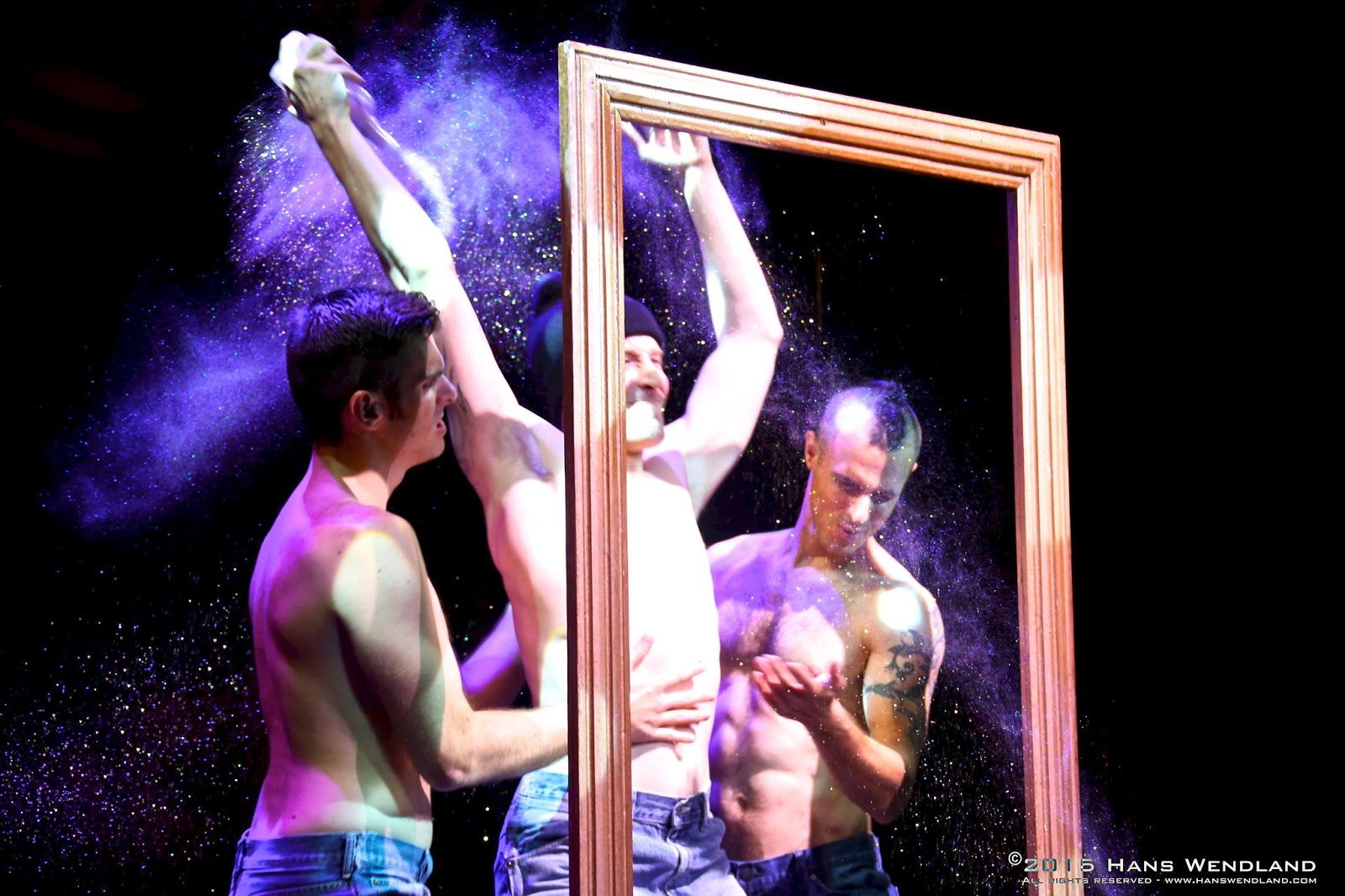
I had been performing about 3 1/2 years before I was a part of a show where the patrons were asked to tip the performers.

I was definitely a little confused when I'd first heard the host setting that expectation with the audience. I wasn't against it per se; I did have a rudimentary understanding that making any kind of money as a performer was and always would be a hustle. I had worked restaurant gigs since I was 16, so I full well understood how tipping worked. I just had never been party to a producer linking that to performance.

As an integrated part of burlesque performing, the concept makes perfect sense. If the performer really blows your socks off, you throw them a bit of extra money to show your appreciation. Ergo, your performance can have an influence on how well you do that night. That's capitalism, baby!

"I mean, I thought that's how we were supposed to fix the economy."

It reminded me of the one time I accompanied a friend of mine who was about to be married to a strip club. The biggest thing that stuck out to me about the way the strip club's economy worked was that every part of our visit was commodified. There was a cover charge when you entered, you were expected to have smaller bills to tip the dancers, buying drinks had its own set of permissions and rates, and individual women were soliciting separate engagements from the patrons.

In this setting, it seemed to me that the actions of the performers were directly tied to whether or not a patron was luring them over with money. Initially, this seems like a different thing from burlesque performance entirely--you're expected to have a set of specific choreography with movements that comprise a routine. In order to have the right punch, your act has to be rehearsed and well timed. If you're collecting dollar bills every couple of seconds, it's hard to imagine that you can execute a planned set of dance moves. It would have to be more improvisational.

I performed at a gig recently with Brandy Wine and Polly Surely of Rogue Burlesque, and it was a paid event where tipping was encouraged. Although the crowd was a room full of drunk DJ's who were mostly dudes (I'll talk about performing for hetero males who are only experiencing their first burlesque show in a later post), there was a strong element of loud-crowd dollar-chucking appreciation, which has a slightly different feel than the whole "pass the basket in church" sort of tipping I had been acclimated with in other burlesque shows. It felt kind of like that scene in Magic Mike where Matthew McConaughey rolls around in dollars wearing a cowboy hat and a thong. It was a gritty kind of party atmosphere--which I kind of loved, not gonna lie.

Don't pretend you haven't seen it.

Because I was doing a routine that I had done about 40 times before, I felt like I had the ability to change things up when needed and accommodate the dollar bills being thrown around near me. I knew that I could skip one of my flourishes with my hat and instead bend over all sexy-like while scooping dollars up and stuffing them into my waistband. You know, the kinds of things that the layman associates with striptease.

Like glitter!

I was chatting with my friend Honey Pie, who I had performed with at a show a year or two ago where tipping was encouraged. The show itself was more of a "buy a $20 ticket, drink a ton to help us hit our bar minimum" sort of theatrical experience which was hosted by a character contributing to the performance, and so it wouldn't have made a ton of sense for people to leave their seats, approach the stage, and fling dollars at the performers.

"I feel like there is a time and a place for it. I have done shows with tipping but it has always been more of a Go-Go set in a night club than a show done in a theater where most of the patrons are sitting down watching a show," Honey told me.

"And I think that's where I don't feel like tipping should happen in Burlesque shows. Most of these shows patrons are paying more money to sit down and take in the beauty of the theater and performers. I myself don't want someone throwing money in crumpled up balls at me or walking up to the stage handing me money while I am up there working my ass of on the hours of choreography I have practiced and the time I put into making that costume look good for you. Sit back, drink and take in the show! I also don't like to see it while I'm taking in the sights of a performance on stage. It's distracting and takes away from the performance art," she said.

Honey Pie

Honey made a great point about gogo dancing, which, as I've learned from doing shows outside of Boston (most prominently D20 Burlesque in NYC with Anja Keister and friends, plug plug!), is pretty much the standard in-between and intro activity for burlesque shows. A dancer can make a good amount of tips doing largely improvisational choreography as a component of a burlesque show's program. But I would hesitate to call go-go dancing a burlesque performance. 

Burlesque, like any other artform, needs support from the patrons to continue. Burlesque fans and show-goers should have extra opportunities to support the performers they enjoy (aside from ticket revenue), and I think that having a gogo set or two and having a basket at every show is a great way for performers to continue to fund their costume, travel, and meal costs.

It's the "stuffing dollars into my underwear" aesthetic that makes me feel a little heeby-jeebly about performing certain engagements. It's a different implication entirely, which stems from what the average person might picture in club-based striptease--I've seen audience members get tossed from burlesque shows because their actions were clearly influenced by strip-club culture. Taking it a bit further, tipping mechanics have a great impact on proper boundaries, which are an inseparable component of burlesque striptease. Generally, most burlesque performers don't want you stuffing money into their clothing pieces, and won't hesitate to let you know it.

Tipping performers is a great thing, although I don't particularly like having to work it into my performance piece. Deciding what kinds of tipping mechanics work best for you in your own performances is a good thing, and I'd encourage you to share your own best practices with me.